Showing posts with label enlightenment good karma buddha. Show all posts

Monday, November 13, 2006

Unsurvivable Weapons - Nuclear by Louis Evan Palmer



Not
Just
Unthinkable


Herman Kahn wrote a book a while ago which he called "Thinking about the Unthinkable" and one of the basic premises it examined is that a war using nuclear weapons could be fought & won. We know, but have seemingly forgotten, that this is not true.

Part of the reason we know it's untrue is because while waiting for a Martian dust storm to clear, the scientists tending to a 1971 Mariner 9 space probe decided to do some extra-curricular investigations. Their resultant calculations highlighted that the dust blocked enough sunlight to significantly lower the temperature on the martian surface. Similar conclusions were reached by German scientists a decade later regarding raging global forest fires that would be caused by nuclear blasts. This led to a concerted effort to study the phenomenon of atmospheric particulates and their effects, especially on sunlight reaching the surface and the life dependent on it. Gwynn Dyer talks about this in the latest edition of his book "War".

In this context, the bottom line was that a nuclear exchange of more than 100 missiles in the 1 megaton range that was targeted on major cities (a likely scenario) would be enough to plunge the world into a nuclear winter with a massive post-explosion loss of life - plant, animal, human.

This is not the hundreds of millions who would die from the bombs themselves which has always been the main focus - this is the billions who survived. It could be the extinction of humans. It would certainly be a mass extinction of plant & animal life. It would also destroy the ozone layer which would render the surface uninhabitable. It would poison the entire world which would not allow it to sustain life. This is a horrible possibility which must be dealt with in the swiftest, most unequivocal manner.

This means that nuclear weapons are unsurvivable which means that they are unusable. The only solution to protecting ourselves against unusable, unsurvivable weapons is for their banning, destruction and subsequent & unrelenting prevention measures up to, if necessary, a prohibition on nuclear (fission) power .

To be clear, unsurvivable means that even if a country launched a completely successful first strike and there was no retaliation whatsoever, everyone on the planet would still die.

If a defensive posture is offered, let it stand as unchallenged that there is no shield imaginable that could stop all the missiles. For this reason, retaliation has always been part of the "defense". The only thing that a anti-missile defense opens the way to is a first strike or, the recurring dream of war planners, a tactical strike.

A tactical strike is such a ludicrous proposition that it defies reason to have it as an option. Does anyone in their right mind think that dropping a few tactical nuclear bombs on the fringes of Russia will not result in a counter-strike? Russia has made it abundantly clear that any nuclear strike against any part of its territory will result in a massive response - not a tit for tat - a full retaliatory counter-strike. What part of that don't we understand? Or, is this possibly a bluff in some catastrophic poker game where the ante is all life on the planet.

This then means that tactical strikes would be reserved for smaller, less powerful non-nuclear countries - which, of course, leads to a tremendous push in these assorted countries for these very weapons; this, in turn, pushes the whole world closer to the brink with each country that joins the "club".

Think about it - we're looking at a situation where India nuclear-fighting Pakistan could destroy the entire planet. Not Russia, China or America - India versus Pakistan. Israel, if it has the 200-400 nukes, it is reputed to have, could also destroy the whole globe if it launched all its missiles at major cities. The game is out-of-control.

The other option which seems to be rearing its venomous head is that of micro-nukes which can be disguised for public consumption as regular high-yield bombs. How many micro-nukes equal the damage of a major nuke? How long would it take to get to that point given the mind-numbing amount of ordinance being hurled at small countries like Afghanistan and Iraq? Does it matter if you're poisoned quickly or over a longer period?

The only reasonable path is an outright ban - immediate, complete, enforceable, and rigorous. Press your government for this, press the U.N. While the soonest possible disarmament is ideal, safety may dictate a slower, paced reduction but it must start now and continue unabated until nuclear weapons are a footnote in the history books.

If it feels like Time is short then it is!

Unsurvivable Weapons - Nuclear, Louis Evan Palmer, The Way It Can Be, http://twicb.blogspot.com
--------------------------------------------------------------------------------------------------------------------------------------------
Copyright Louis Evan Palmer 

He lives in Ontario Canada. His short stories have been published in numerous publications. 

BUY BOOKS BY LOUIS EVAN PALMER

Friday, November 03, 2006

Best We Forget by Louis Evan Palmer


Cheering

For

The

Home

Team


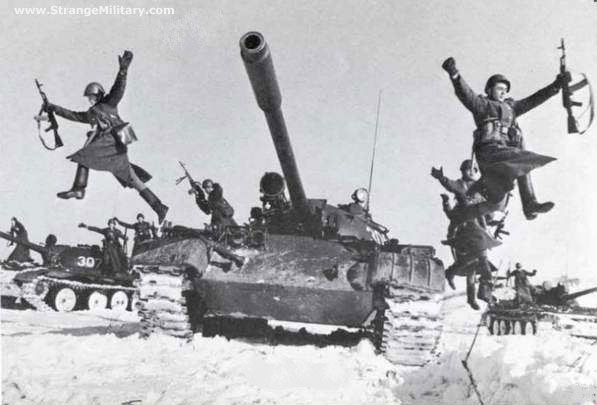
There is always a waxing and waning in the effusion of patriotic fervour associated with Remembrance Day. It has an uptick when there is an anniversary or when there are Canadian troops committed somewhere. It tends to drop out of consciousness when times are good.

While some sit back now and make poetic statements about freedom and sacrifice, there is not much talk about the futility of many wars or the bloodthirstiness of their prosecution. There is also not much in the way of mass media coverage of how specific wars got started or who benefited financially or what nations advanced their causes or sphere of power.

It was said that many of those who marched off to World War I were enthusiastic and anticipated being home and victorious in a few weeks. It was an adventure and a chance to make triumphant noises over a prostrate enemy while crowing about British or French or German greatness.

We do want to remember and having a day dedicated to it certainly helps but it also moulds it into a public event which means into a propaganda event. Now it attempts to highly praise our troops in Afghanistan, to glorify in a subdued way. Forgeting about whether there was any legal justification for being there or how NATO got itself hoodwinked into assuming the bloody mantle of leadership from the United States, having troops dying strongly invites the expression of the most primal type of chest-thumping, flag-waving, thought-numbing jingoism.

Having a day like this makes us admire the soldiers of the past whether we should or not. Defending yourself well is admirable. Being able to fight well is advisable. But extolling the dead and their victorious living comrades put us into a mindset where war is an answer. Defending means someone has invaded your territory - that foreign troops are actually on your soil - and currently that is only true about us.

We have a Remembrance Day advertisement that shows a crusty bloated old soldier in some Canadian Legion facsimile of a uniform standing beside a teen-aged boy who is dressed in what appears to be a cadet's uniform. By showing us this linkage, it gives us every indication that the fateful process of germinating the next crop of cannon fodder is underway, one generation setting off the other.

Ringing bells and shooting off guns and blowing sombre horns shouldn't be such a big part of our remembrance. Preventing wars and understanding their causes should get more of our attention. Honouring non-military non-conflict-based peace-makers and peace-keepers should get more of our attention. We don't need any more of the ancient Roman desert-making peace - the peace of death and desolation.

But we constantly peer through a portal on war, the tragic failure of peace, where it's typically portrayed as vile and wrenching (for us) yet exciting and intense. It's part of an atavistic subculture that seems to dominate world politics even as it's denied. The warriors are listened to, the peace-makers are set aside for other less dangerous times.

Our extravagant memorializing has the opposite effect - it may not glorify war per se but it glorifies sacrifice which can be worse because it's more encompassing; worse not in itself but in its potential for misuse as a powerful tool of manipulation. The end result is to stifle dissent and ostracize critics. We make for ourselves a drum-beating tyranny-lite and hope it goes away after the war, hoping as well that the current war will end even though almost all its causes are still present.

Sometimes remembering the way we do on Remembrance Day is a way of denying the senselessness of it, its preventability, where the fault for these things really lies. It begs some questions though: Can you be good at something you don't practice? Can you practice something that you don't, at some level, admire? Can you admire something without wanting to try it?

Best We Forget, Louis Evan Palmer, The Way It Can Be, http://twicb.blogspot.com
--------------------------------------------------------------------------------------------------------------------------------------------
Copyright Louis Evan Palmer 

He lives in Ontario Canada. His short stories have been published in numerous publications.
BUY BOOKS BY LOUIS EVAN PALMER


Saturday, October 21, 2006

Dueling with Duality by Louis Evan Palmer


State
Absence
Relationship
Context
Awareness


Duality is a natural state for people. We learn that basic "fact" early on and never quite seem to shake it. Typically, we never have reason to. It is a state where we feel, without obvious effort on our part, that almost every thing we sense has something which stands opposite to it or in opposition to it or apart from it in some relationship.

Duality seems to have aspects of a "state", aspects of a "relationship" and also to merely reflect the presence or absence of something where we often feel that the absence is a force or substance of equal stature to the one we sense by its presence.

For example, cold is the absence of heat. Heat is the presence of energy, cold is its absence. Yet, we feel cold as a force on its own even when factually it's nothing, it's the absence of heat.

Another clear example, darkness is the absence of light. Again, we usually feel darkness as a force on its own but it's an absence we detect and to which we react.

It's a perfect incarnation of the binary concept where 1s and 0s are the substance and 1s are the presence and 0s are the absence. However, this concept presents an interesting twist whereby position and relation give meaning to the absence beyond just being nothing.

Another idea to think about - if we looking at either a presence (say, heat) or an absence (say, cold), we may never notice it if it didn't vary. It is the contrast which allows us to observe many, perhaps all, phenomena. If, in fact, we cannot perceive things which do not vary then who knows what myriad of "things" we co-exist with but not not perceive because they do not vary. ..... like the source of everything.

We must also remember that context is part of the equation: we apprehend something like heat in a universe of space and time and mass and energy; we detect the presence or absence of one thing while situated in a realm on other things in which the presence or absence manifests itself.

To touch on the variance theme, we can go one further, if something exists which we cannot perceive in any way (to date), then we are not aware of its presence or absence. If that element were significant then our whole definition of reality would become suspect.

Thus far, we have a presence or an absence; we have a state which varies; and, we have a relationship wherein an absence or a presence gains additional meaning; we have context; and we have that which we cannot apprehend.

Some of the common things that we consider to be related in a dualistic relationship: love versus hate - hate seems to be more than the absence of love, where an absence of love seems to imply a frigidity, a lack of emotion, a lack of interest or empathy for someone; hate draws to mind, an active force directed at someone but with malice and ill-will. Is coldness and no feeling the opposite of both Love and Hate? It is if we want to maintain duality as a balance of presence versus absence. However, that's probably not how most people think of it.

Other potential dualities are more of the type where one thing stands apart from some other thing in some kind of a relationship. "Here" versus "There" or "Now" versus "Then". These are more of the measuring kinds of dualities - the one thing is located at a different point on some measuring standard versus another thing - in one case, it's a measure of space as in "here" versus "there"; in another case, it's a measure of time as in "now" versus "then".

"You" versus "Me" can be looked on in this way but it's really more than that though - it's one type of being versus another instance of that type of being.

"Motion" versus "Stillness" is an absence versus presence duality. "Conscious" versus "Unconscious" may be this type unless we use the more common meaning of "Unconscious" as a type of consciousness of which we are unaware - then it's two types of consciousness.

Some would argue that "Evil" is the absence of "Good" and in a similar manner that "Hate" is the absence of "Love" but it doesn't seem that way.

Reaching into the physical world again, we have a "Particle" versus a "Wave". Here is where an interesting thing happened. It was regarded for hundreds of years that phenomenon that exhibited these characteristics had to be one or the other and it was up to us to figure out which one a given thing was. At the turn of the 20th century, it began to be realized that a photon, for example, was actually both a particle and a wave. How it was both became the focus of another profound debate which is still going on today.

The Wave - Particle debate can be considered similar in some ways to the relationships a given person may have with other members of one's family - say for a male: son, brother, uncle, nephew, father, grandfather... we don't consider it an either-or proposition and yet it's the same person who has these very different relationships - is it also a duality of sorts? Maybe a photon has a "wave" relationship with certain physical aspects of reality and a "particle" relationship with other physical aspects. If so, a photon, or any other particle of this type, may have other non-wave non-particle relationships that affect its interaction with the physical world.

Is duality a lesser reality, a circumscribed version of the real thing, which allows us to navigate this universe but never actually apprehend it directly? Is it possible to adjust, or un-adjust, the observer so as to see the reality from which the duality emerges? Since it appears that the final arbiter emanates from consciousness, it would lead us to conclude that we can apprehend the reality in which duality is embedded.

What changes would ensue from this type of breakthrough? Or, perhaps "breakthrough" is not the right word as it implies something new when, in fact, it's something prior - maybe something like "unbirth" is a more accurate way of phrasing it.

It's reminiscent of sages who say we live in two realities - the dualistic one and the one from which it emanates. The feeling is that it can only be a "good" to see beyond duality.

Dueling with Duality, Louis Evan Palmer, The Way It Can Be, http://twicb.blogspot.com

--------------------------------------------------------------------------------------------------------------------------------------------
Copyright Louis Evan Palmer 

He lives in Ontario Canada. His short stories have been published in numerous publications. 

BUY BOOKS BY LOUIS EVAN PALMER